Supreme Court: Recovery of Tainted Money Without Proof of Bribe Demand Insufficient to Convict Under Prevention of Corruption Act
AAPKA ADHIVAKTA > Blog > Articles > Supreme Court: Recovery of Tainted Money Without Proof of Bribe Demand Insufficient to Convict Under Prevention of Corruption Act
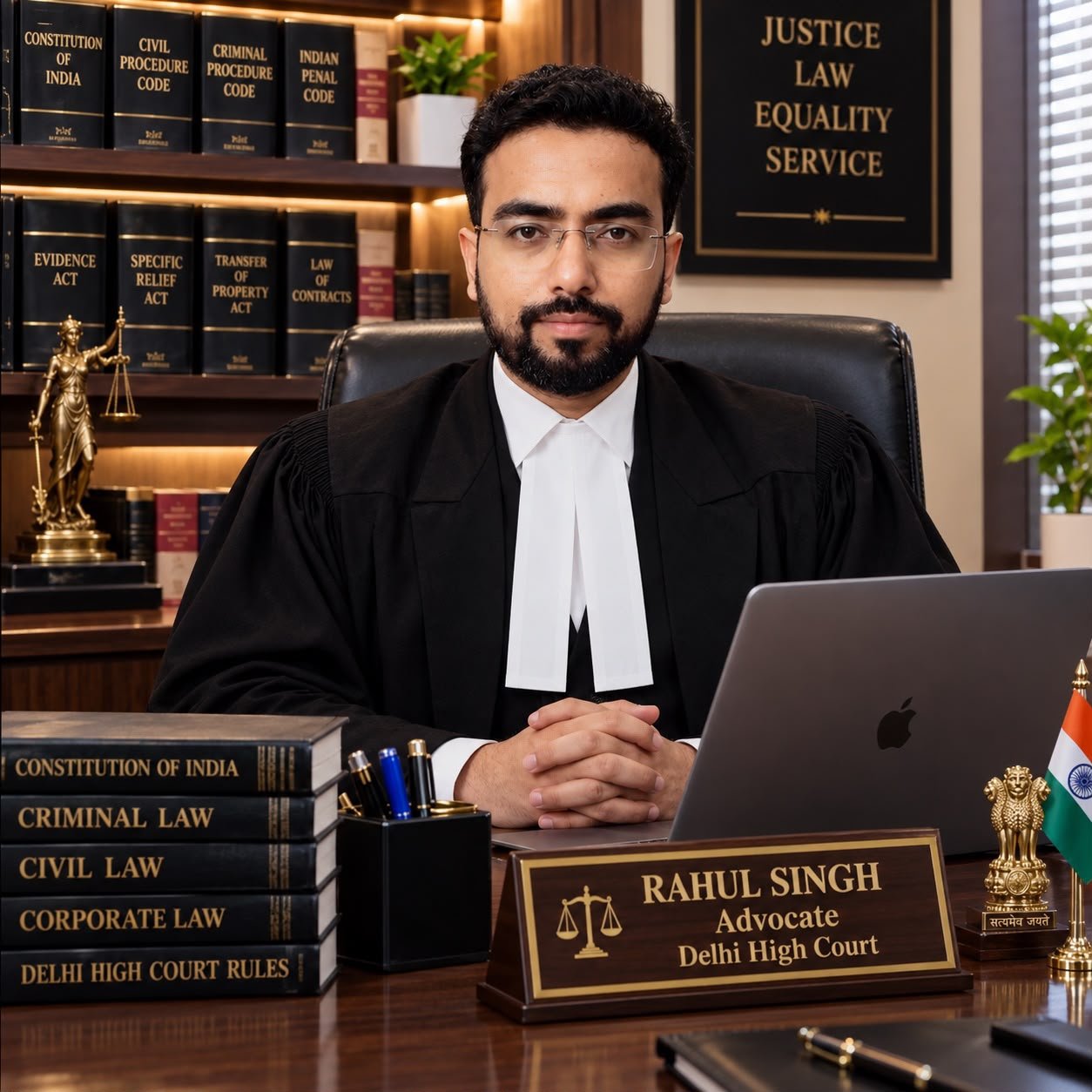
Author: Rahul Singh Advocate, Founder, Aapka Adhivakta Law Firm
Executive Summary
In Jaswinder Singh (Dead) Through LRs. v. State of Punjab (Criminal Appeal No. 2137 of 2014), a bench comprising Justice Ujjal Bhuyan and Justice Arun Palli of the Supreme Court of India has emphatically reaffirmed that mere recovery of tainted currency notes, in the absence of direct or conclusive proof of a demand for illegal gratification, is insufficient to sustain a conviction under Sections 7 and 13 of the Prevention of Corruption Act, 1988 (PC Act).
The Apex Court reiterated that the proof of demand and acceptance of a bribe is the sine qua non (an indispensable condition) for establishing an offense under the PC Act.
Case Background & Procedural History
The Allegation: The appellant, serving as a Patwari at the relevant time, was accused of demanding a bribe of Rs. 10,000/- (later settled at Rs. 9,500/-) from an informant (PW-1) for executing a property mutation.
The Raid & Trial: The Vigilance Bureau organized a trap, during which tainted currency notes treated with phenolphthalein powder were allegedly recovered from the appellant. The Special Judge, Hoshiarpur, convicted the appellant under Sections 7 and 13(2) of the PC Act, sentencing him to two years of rigorous imprisonment.
High Court Affirmation: The Punjab and Haryana High Court dismissed the appellant’s appeal, affirming the conviction. During the pendency of the proceedings before the Supreme Court, the original appellant passed away, and his legal representatives were substituted to contest the appeal.
Supreme Court Ruling: The Supreme Court allowed the appeal, setting aside the concurrent findings of the lower courts and acquitting the appellant of all charges.
Key Legal Principles Laid Down by the Supreme Court
Demand is the Gravamen of the Offense: Citing landmark precedents including P. Satyanarayana Murthy v. State of A.P., the Constitution Bench ruling in Neeraj Dutta v. State (NCT of Delhi), and Aman Bhatia v. State, the Court held that the prosecution must prove both the demand and acceptance of illegal gratification as a fact in issue.
Recovery Alone is Not Enough: Mere possession and recovery of tainted currency notes, dehors proof of a voluntary demand and acceptance by the public servant knowing it to be a bribe, cannot legally justify a conviction under the PC Act.
Flaws in Witness Testimony: In the present case, shadow and official witnesses (PW-2 and PW-4) admitted during cross-examination that the money was neither paid by the informant nor recovered from the appellant in their presence. Furthermore, material contradictions regarding whether the money was recovered from a shirt pocket or trouser pocket undermined the prosecution’s case.
Conclusion
This ruling serves as a vital precedent reinforcing statutory safeguards against mechanical convictions in corruption cases. The Supreme Court has made it crystal clear that without concrete, unimpeachable evidence establishing a prior demand for illegal gratification, recovery of tainted money alone collapses the prosecution’s case.
“(This article is shared solely for legal information and public interest purposes. For specific legal advice regarding any of your cases, please consult a relevant advocate.)”
As per the rules of the Bar Council of India, advocates are not permitted to solicit work or advertise in any form.
By clicking “I Accept”, you acknowledge that you are visiting this website voluntarily for informational purposes regarding Aapka Adhivakta and there has been no solicitation, advertisement, or personal inducement. The content provided herein does not constitute legal advice or create a lawyer-client relationship.